Healthcare / Hospital Management
Clinivora AI
Intelligent Care Management
A single clinical system that runs the whole practice — patients, appointments, lab, imaging, pharmacy and billing — with AI supporting clinicians at the point of care.
- Live in production
- 23 documented features across 5 areas
- White-label in 4–8 weeks
Features
23
Areas
5

Overview
Clinivora AI replaces the tangle of booking tools, spreadsheets and standalone lab software that most clinics accumulate.
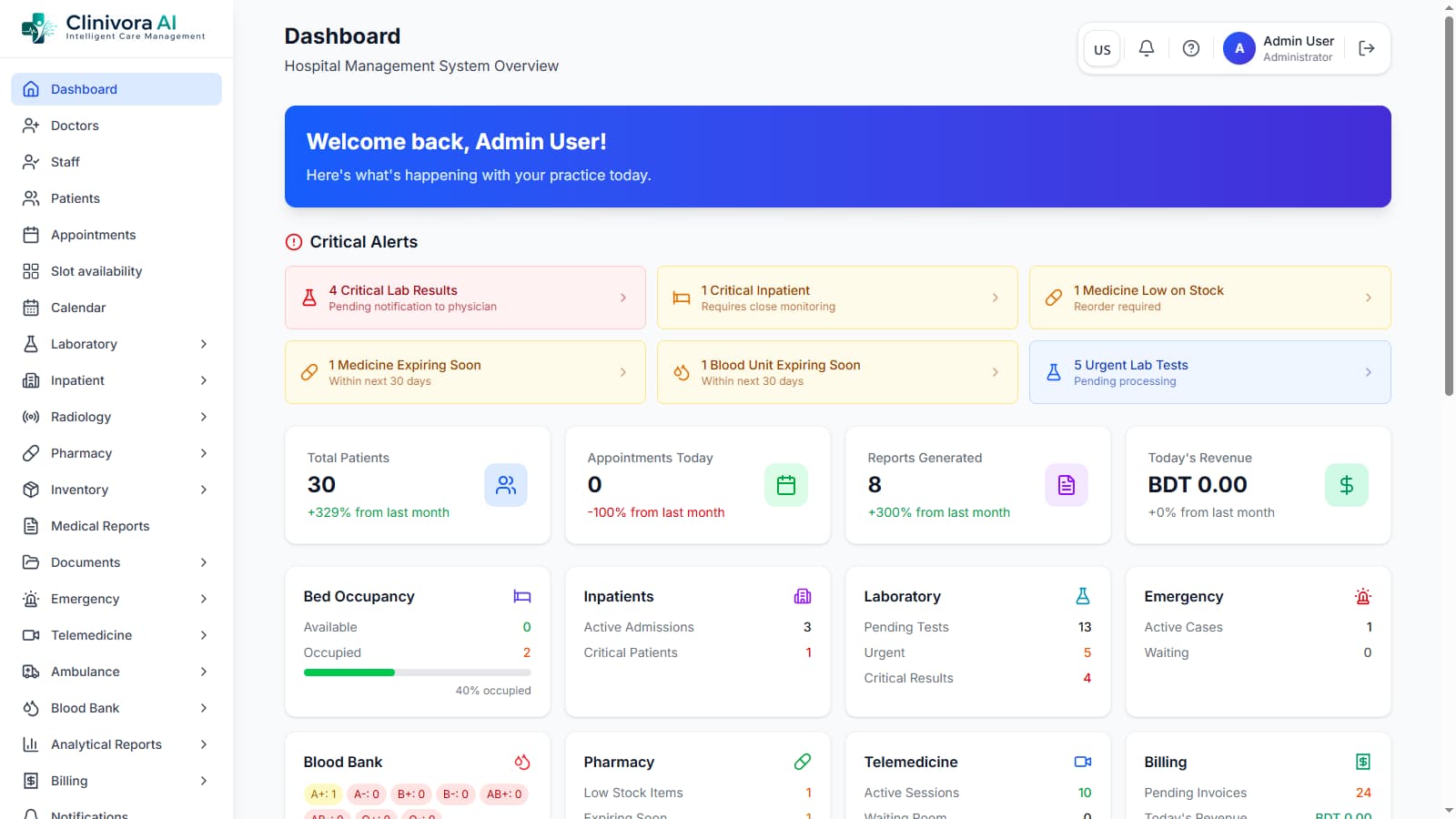
Patients, appointments, emergency triage, wards, laboratory, radiology, pharmacy, billing and telemedicine share one patient record. Lab analysers connect over HL7/ASTM with a live results queue; imaging modalities connect over DICOM with worklists and STOW-RS upload — the integrations that usually require a separate vendor each.
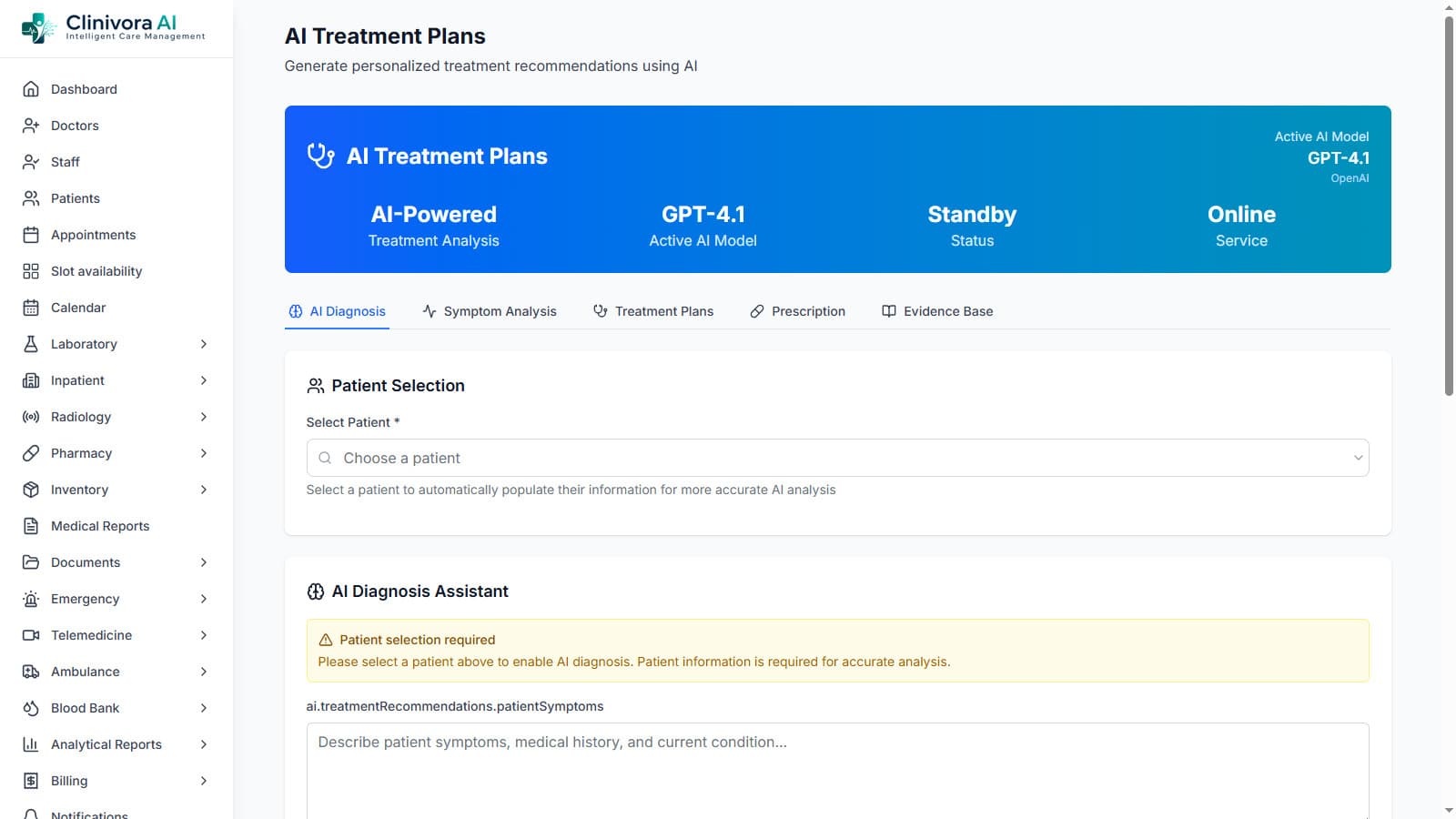
The AI is wired into the clinical workflow rather than bolted on: it drafts treatment plans from the patient's history, flags drug interactions with severity before a prescription is issued, highlights potential abnormalities in uploaded scans for radiologist review, and turns dictation into structured notes. Every AI output is decision support — the clinician reviews, edits and remains responsible. The system also runs the public side of the practice: a website with online appointment requests that respects each doctor's real availability.
- Clinical operations
- Diagnostics
- AI assistance (clinical decision support)
- Patient-facing
- Business operations
What's inside
23 features across 5 areas
Deploy the whole platform, or start with the areas that hurt most. They share one data model, so nothing needs reconciling later.
Clinical operations
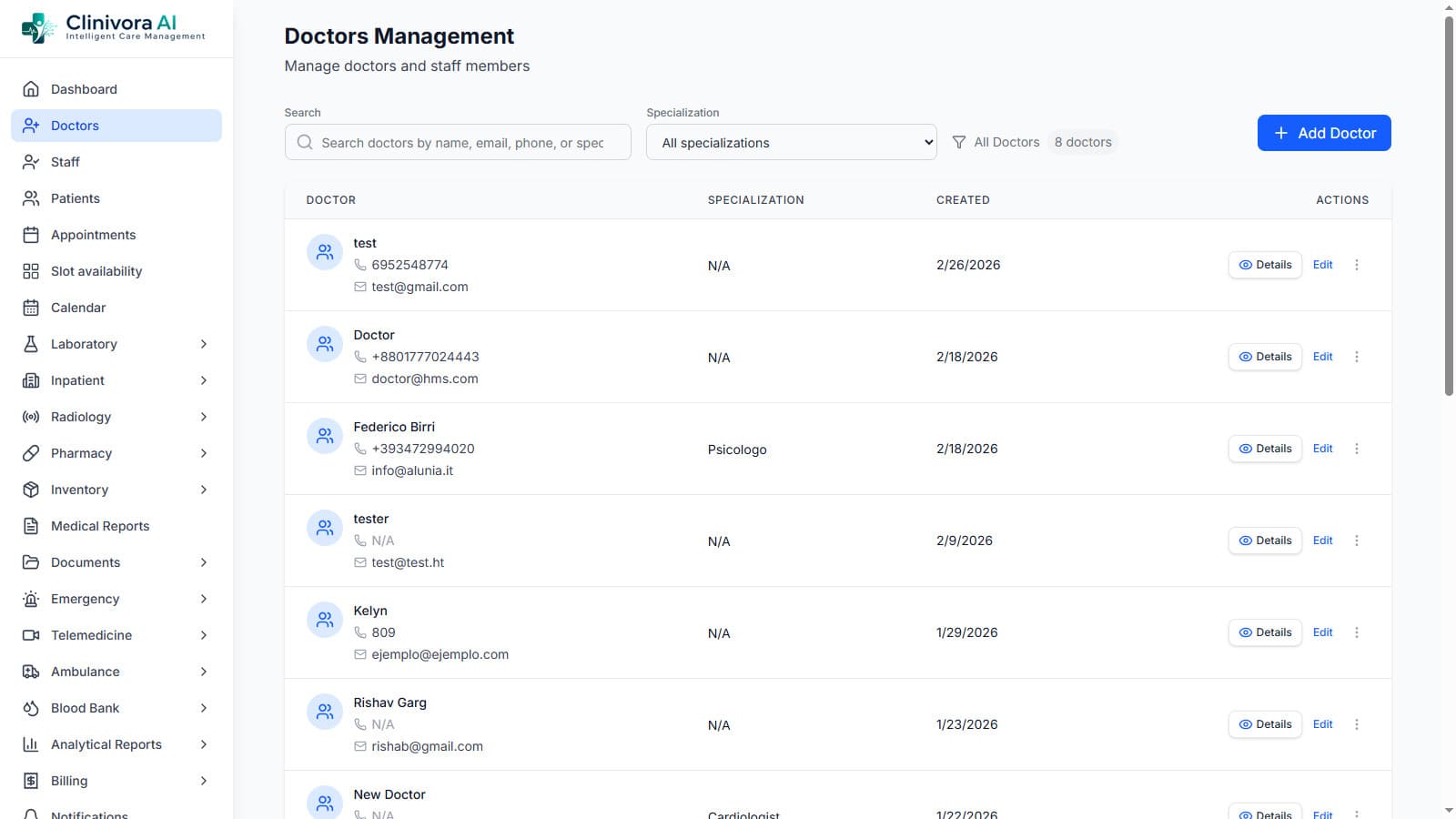
- Unified patient records with history, insurance and documents
- Appointment scheduling with conflict detection across doctors and rooms
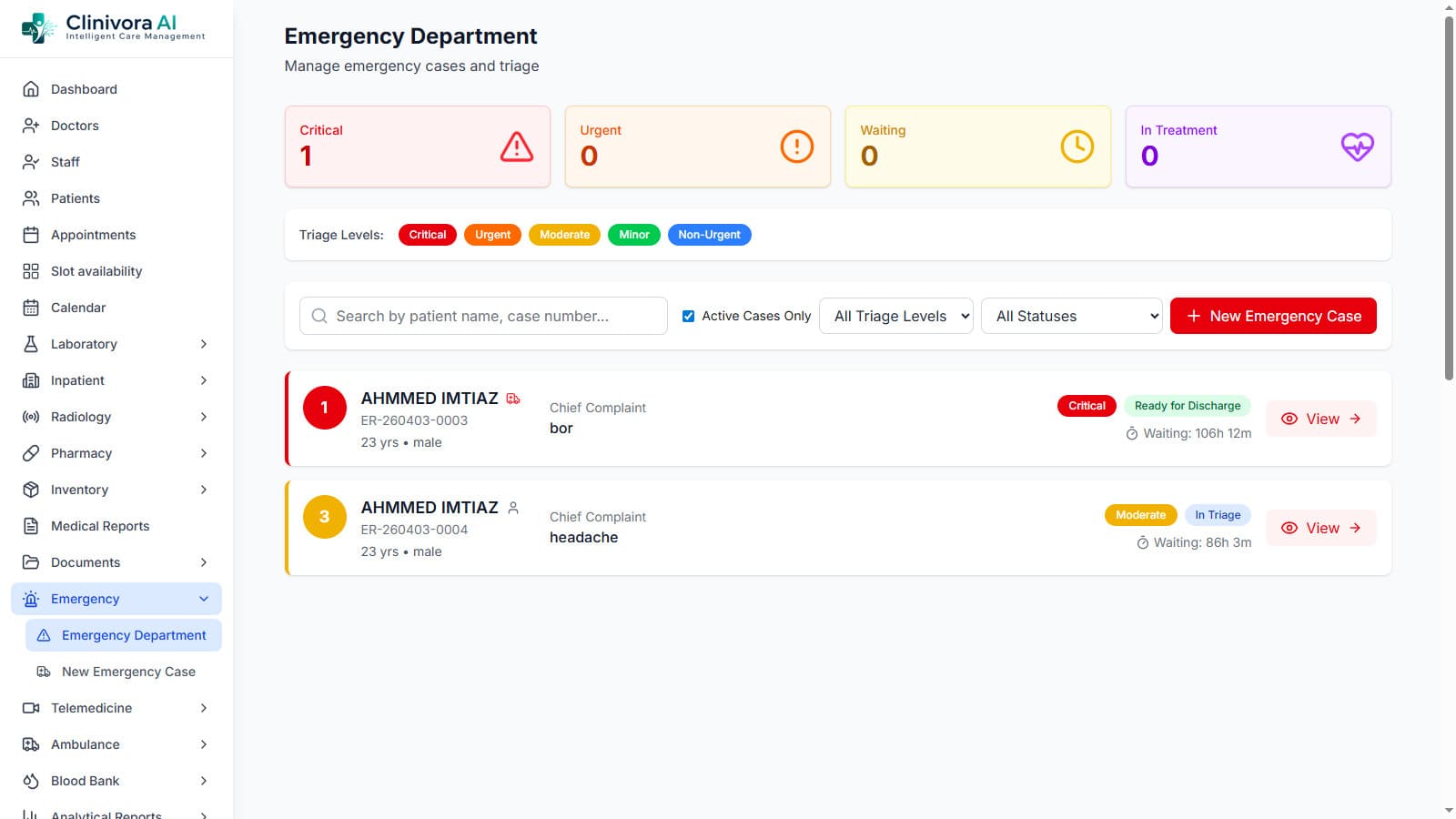
- Emergency department triage with vital signs and case tracking
- Inpatient ward, bed and admission management
- Ambulance booking and fleet coordination
Diagnostics
- Laboratory information system with HL7/ASTM analyser integration and a live results queue
- Radiology with full DICOM support, modality worklist and STOW-RS upload
- Automatic flagging of out-of-range results
- Medical reports with status tracking and PDF export
AI assistance (clinical decision support)
- Symptom analysis and clinical Q&A assistant
- Treatment plan drafting from patient history
- Drug interaction checking with severity ratings
- Medical image review support across X-ray, CT, MRI and ultrasound
- Voice-to-text transcription of consultations
- Patient risk scoring, health trend analysis and appointment optimisation
Patient-facing
- Telemedicine with video, audio and chat plus a virtual waiting room
- E-prescriptions issued directly from the consultation
- Public website with services, announcements and FAQs
- Online appointment requests with SMS identity verification
Business operations
- Pharmacy catalogue and stock control
- Inventory with suppliers and purchase orders
- Billing, invoicing and payment tracking
- Analytics dashboards with CSV export
How it works
Built around what people actually do all day
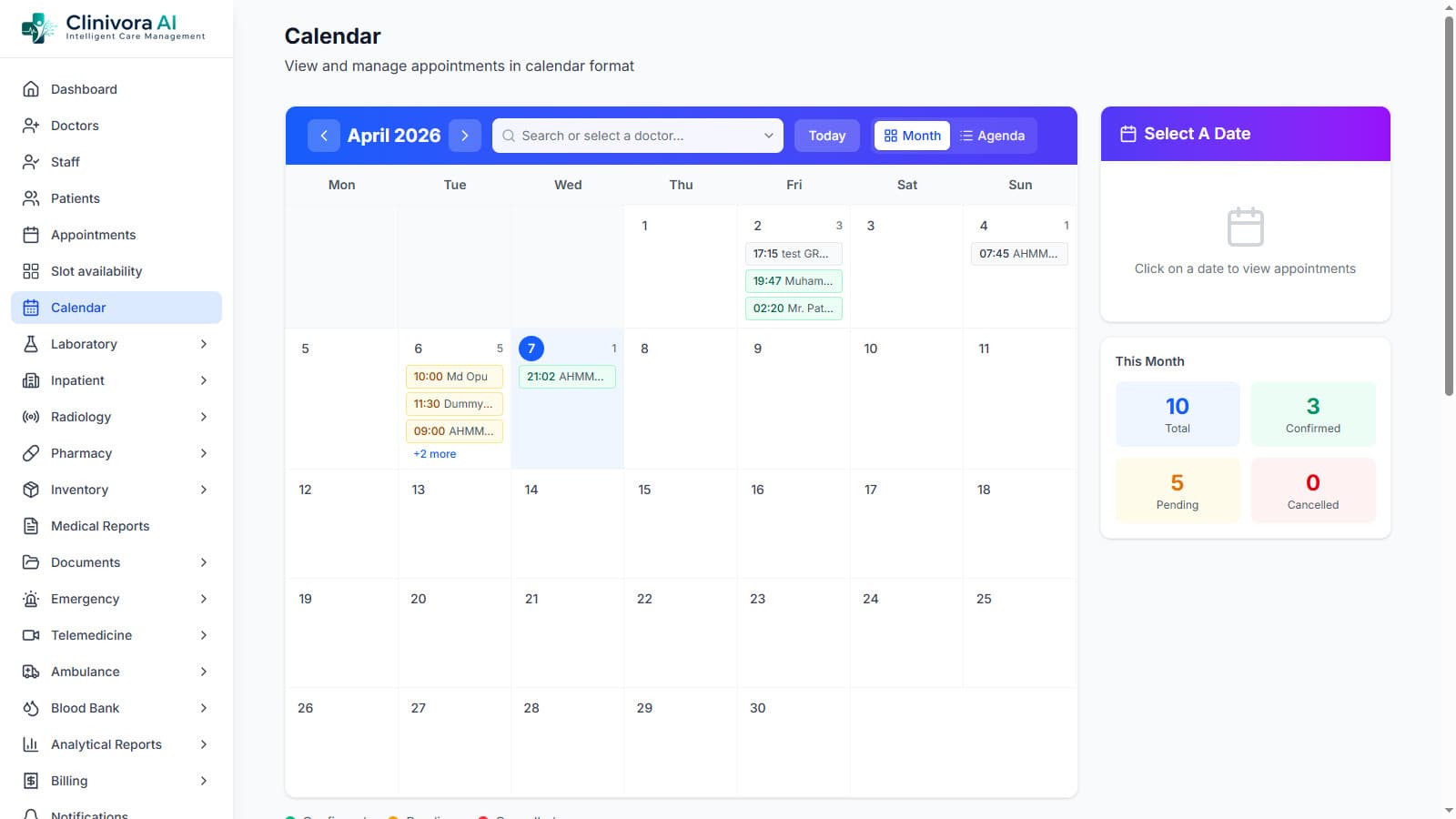
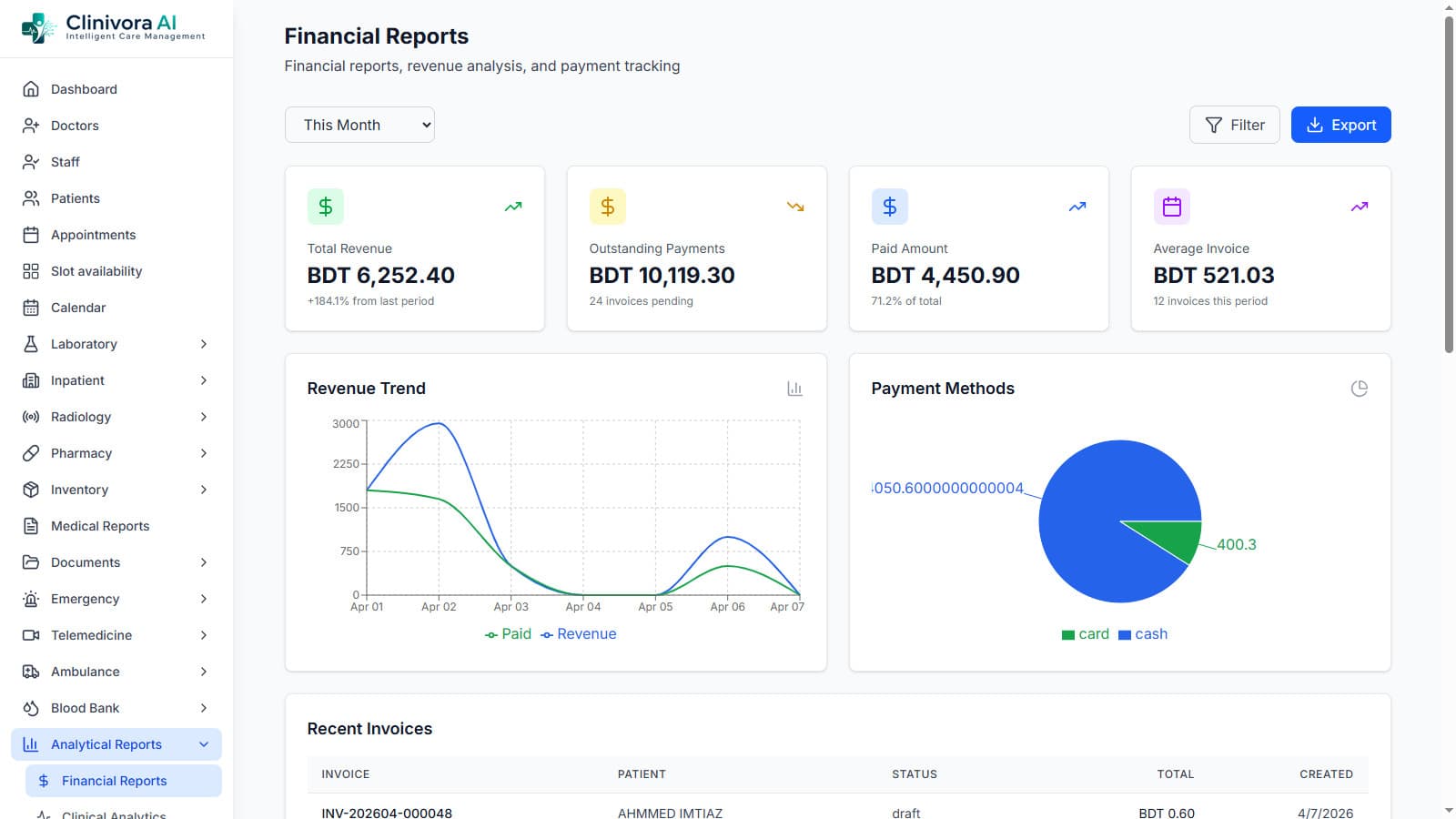
Real screens
A guided look inside
Production screens from a live deployment. Pick one to see what it does.
Screen 01
Clinical operations
Patient record with history, documents and encounters.
Who it is for
Built for operations that look like this
If yours is close but not identical, that is usually a configuration question rather than a custom build.
- 01
Hospitals and multi-department clinics
- 02
Private and group practices
- 03
Telemedicine and virtual care providers
- 04
Diagnostic labs and imaging centres
- 05
Healthcare groups standardising across branches
Security & data
Built to pass your IT and compliance review
Patient data protection
Role-based access, audit logging and encryption in transit; deployable in-region for health-data residency requirements.
AI governance
AI outputs are decision support only; clinician review required; provider selectable (including options with no-training data terms).
Regulatory framing
Not marketed as a certified medical device; positioning is clinical workflow software with decision-support features. Confirm local health-IT requirements per market.
Availability
Backup, restore and uptime approach for 24/7 clinical use.
Deployment & licensing
Two ways to run it. Both yours to choose.
We do not publish implementation details of our platforms. What matters to your IT and procurement teams is how it is hosted, who operates it, where the data lives and what you are buying — so that is what this section answers.
Cloud — annual subscription
Hosted and operated by Kaidova on enterprise cloud infrastructure in your chosen region. Includes updates, monitoring, backups and support. Predictable yearly cost; no infrastructure to run.
Perpetual license — self-hosted
A one-time license to run the platform on your own infrastructure or private cloud, with full control over data residency and access. Implementation, training and optional support agreement from the team that built the platform.
In both models: your data is yours and exportable at any time · white-label branding at token level · custom modules and integrations available under the Extend route · documented administration and user training included in every deployment.
Integrations & compatibility
Shown because buyers need them to assess fit — none of these disclose how the platform is built.
- Pluggable AI provider — OpenAI, Anthropic or Google
- Twilio SMS; DICOM/STOW-RS and HL7/ASTM for device integration
- Four languages: English, Spanish, French, Arabic
Deploy, extend or build
- Deploy — brand, configure, launch in 4–8 weeks.
- Extend — add the modules your operation needs; upgrade path intact.
- Build — ground-up when nothing fits, reusing platform components where they save money.
See Clinivora AI with your own clinic's workflow
Bring one live case to the demo and we will walk it through the system in thirty minutes. No slide deck.
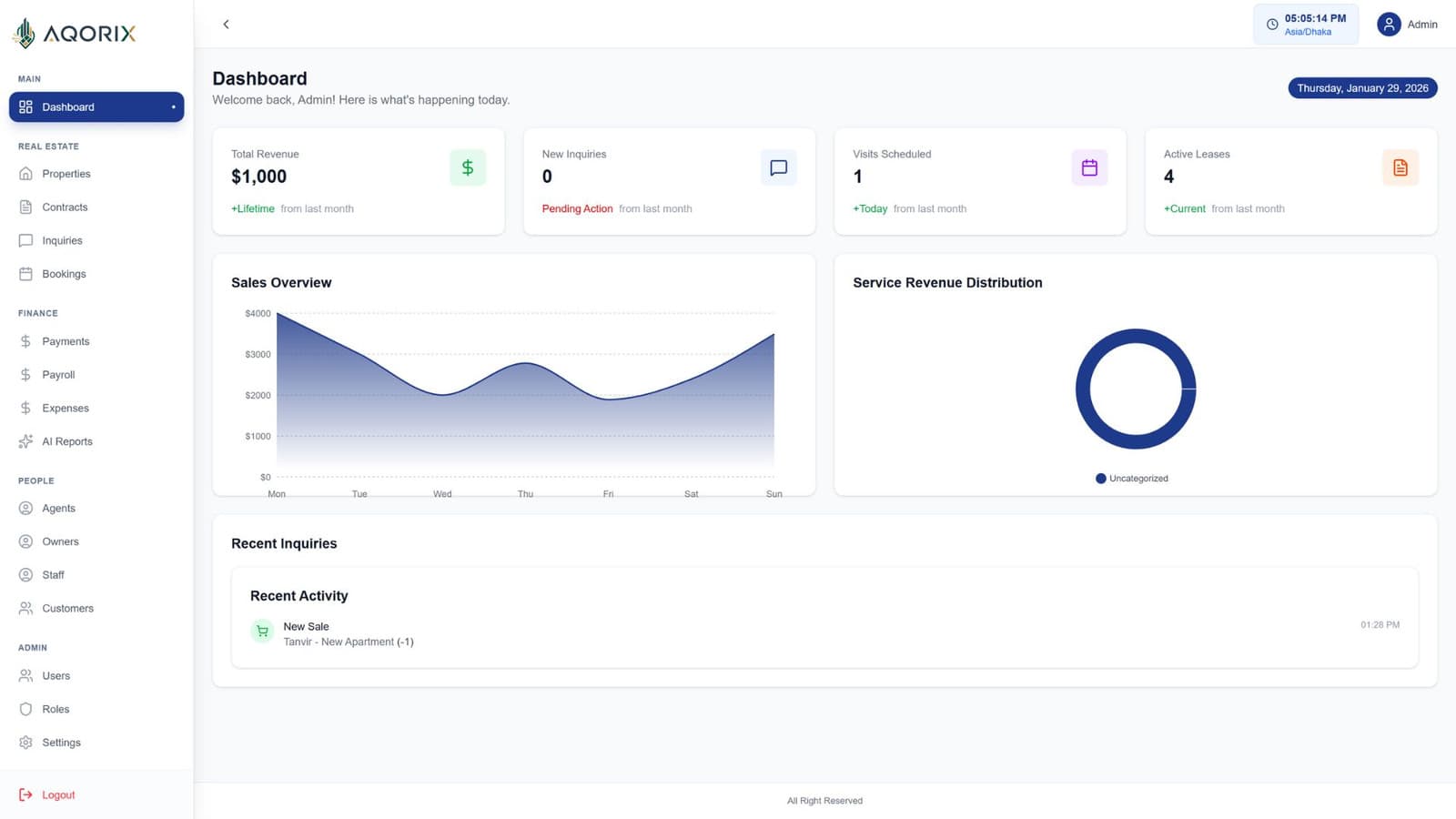

Aqorix
View platform
Docentra AI
View platform

Shoplance
View platform